
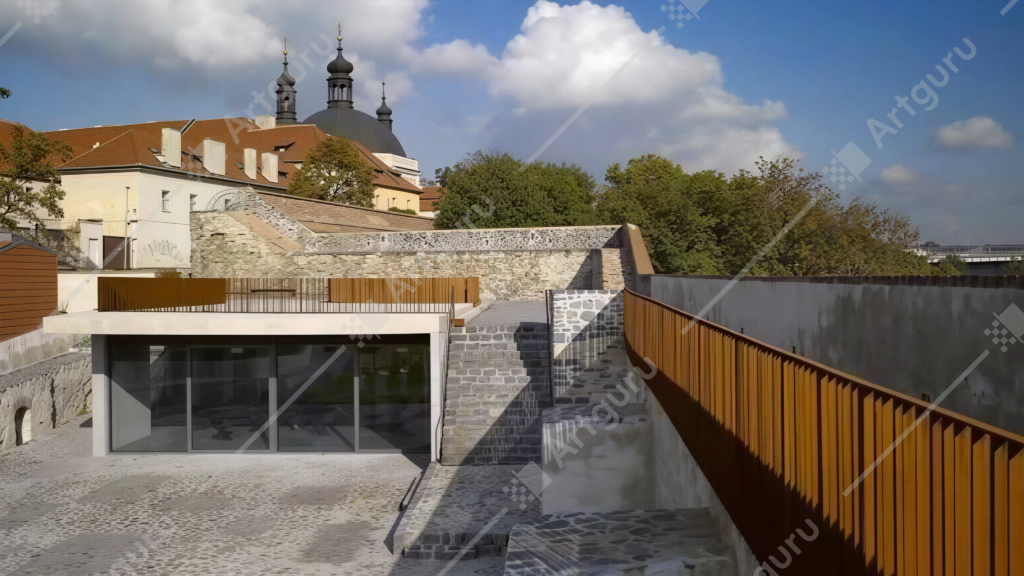
Crucifix Bastion is a fascinating historic landmark in Prague, Czech Republic. It is connected with the old fortification system of Prague and reflects the city’s long architectural history. Although many tourists visit Prague for its famous bridges, castles, and squares, this lesser-known site offers a different experience. The area combines historic defensive architecture, modern design, public space, and cultural heritage. Therefore, Crucifix Bastion is an interesting destination for travelers who want to explore a quieter and more historic side of Prague.
Crucifix Bastion What Is It?
Crucifix Bastion is part of the historic fortifications associated with Prague’s New Town. It is also known as U Božích muk and is identified as Bastion XXXI. The site represents an important part of Prague’s defensive history and shows how the city developed around its fortification system. Over time, the original military purpose changed, while the surrounding urban environment continued to grow. Today, the bastion provides visitors with an opportunity to see historic walls alongside modern architecture and landscaped public areas.
Early History
The history of Crucifix Bastion is closely connected with the foundation of Prague’s New Town. Charles IV founded the New Town in 1348 as Prague expanded and required additional urban space. Naturally, protecting this growing part of the city was also important. Strong walls and defensive structures were developed around the new urban area. As a result, the fortifications became an important part of Prague’s medieval landscape. The surviving remains allow modern visitors to understand how the city was once protected.
Crucifix Bastion Old Defenses
Medieval cities needed strong defenses because conflicts were common across Europe. Prague was no exception, and its walls were designed to protect important areas and control access to the city. However, military technology changed over the centuries, so older defensive structures were modified and strengthened. Consequently, the fortifications around Crucifix Bastion represent several stages of architectural development. The site therefore tells a longer story than a simple medieval wall might suggest.
Bastion Design
A bastion was designed to strengthen a defensive wall and provide strategic protection. Unlike a simple vertical wall, a bastion could create better positions for defending the surrounding area. This made bastions important elements of European military architecture. Crucifix Bastion reflects this wider development in defensive design. Although its military purpose has disappeared, its historic structure still demonstrates how architecture was once closely connected with security and urban planning.
Crucifix Bastion Baroque Influence
Crucifix Bastion also reflects changes that took place during later periods of European fortification development. In particular, Baroque military architecture introduced different approaches to defensive planning and construction. Therefore, the present character of the site cannot be understood only through its medieval origins. Instead, it represents several historical layers that developed over time. This mixture makes the bastion especially interesting for people who enjoy architecture and European history.
Prague Fortifications
The bastion was not an isolated structure. Instead, it formed part of a wider defensive system surrounding important areas of Prague. Walls, gates, towers, and bastions worked together to create a protected urban boundary. Over the centuries, however, Prague expanded beyond many of its original defensive limits. As a result, some fortifications disappeared while others survived within the modern city. Crucifix Bastion is valuable because it preserves a visible part of this historic landscape.
Crucifix Bastion Link With Vyšehrad
One of the interesting features of the location is its relationship with Vyšehrad. Vyšehrad is another important historic fortified area of Prague, and the two locations help explain the defensive geography of the city. In addition, views toward the surrounding landscape make the location more attractive. Visitors can therefore experience both architecture and urban scenery in one area. This connection also helps explain why the bastion was important within the wider defensive landscape.
Crucifix Bastion A Hidden Site
For a long period, parts of the historic fortification area were relatively hidden from ordinary visitors. Modern streets and buildings gradually surrounded the old structures, while their original military purpose disappeared. Consequently, the bastion became less important in everyday city life. However, this limited use also helped preserve some historic elements. Eventually, new attention was given to the site and its potential as a public cultural space.
Modern Revival
The modern revival of Crucifix Bastion created a new chapter in its history. Instead of simply preserving the old walls, the revitalization introduced new public functions while respecting the historic character of the location. The project was developed following an architectural competition in Prague. Later, MCA atelier completed the revitalization in 2011. Therefore, the site became an example of how historic architecture can be adapted for modern use without completely changing its identity.
New Architecture
The modern architectural intervention is one of the most notable aspects of Crucifix Bastion. Much of the new construction was designed in a way that reduced its visual impact on the historic walls. Instead of dominating the old structure, the contemporary elements work alongside it. This approach creates a clear contrast between old masonry and modern design. At the same time, it allows visitors to experience the historic fortification without losing the benefits of a contemporary public facility.
Crucifix Bastion Public Space
Today, the area provides more than a view of historic walls. The revitalized site includes spaces designed for public and cultural activities. Visitors can spend time in the area, enjoy the surrounding landscape, and experience exhibitions or other events when available. As a result, the bastion has become more connected with everyday urban life. This change is important because active public use can help keep historic places relevant for future generations.
Cultural Role
The cultural role of Crucifix Bastion is another reason the site stands out. Historic buildings can sometimes become isolated monuments that people only photograph from outside. However, the revitalized bastion was designed to encourage interaction and public activity. Consequently, the site can support cultural programs, exhibitions, and social events. This combination of history and modern use creates a more engaging experience for visitors.
Open Landscape
The landscape around the bastion adds another dimension to the visitor experience. Green areas and open spaces create a peaceful contrast with the strong stone and masonry of the historic fortifications. Moreover, the design encourages visitors to move between indoor and outdoor areas. This relationship makes the site feel less like a closed museum and more like an open part of the city. Therefore, travelers can enjoy history while also experiencing Prague’s urban landscape.
Historic Walls
The historic walls remain one of the most important features of Crucifix Bastion. Their construction reflects the defensive needs of an earlier Prague. Thick masonry and strategic positioning show how seriously medieval and later planners considered urban protection. Today, however, these walls serve a completely different purpose. Instead of defending the city, they preserve evidence of its past and provide visitors with a physical connection to earlier generations.
Crucifix Bastion Wall Chapel
The site also includes a wall chapel that adds a religious dimension to the historic location. Its presence helps explain the name associated with Crucifix Bastion and connects the site with the religious culture of earlier periods. In addition, contemporary artistic elements have been introduced around the chapel. Therefore, visitors can see military history, religious heritage, and modern art existing within the same environment.
Folimanka Park
The connection between Crucifix Bastion and the surrounding green areas makes the site suitable for a relaxed walking experience. Folimanka Park is located nearby and adds greenery to the historic environment. Visitors can combine an exploration of the fortification with time in the park. Furthermore, the contrast between old defensive walls and modern public greenery makes the area visually interesting. This combination gives travelers another reason to explore beyond Prague’s busiest tourist streets.
Architecture Today
Crucifix Bastion demonstrates how old and new architecture can exist together. The historic fortification provides a strong and traditional visual identity, while the modern intervention introduces simple contemporary forms. Rather than copying the old structure, the new architecture creates a clear distinction between different periods. As a result, visitors can easily recognize which elements belong to the historic site and which belong to its modern transformation.
Crucifix Bastion Why Visit?
Travelers interested in history, architecture, and urban design can find several reasons to visit Crucifix Bastion. First, it provides a glimpse into Prague’s historic defensive system. Second, it demonstrates an interesting approach to heritage restoration. Finally, its surrounding landscape creates a quieter atmosphere compared with some of the city’s busiest attractions. Therefore, it can be a useful stop for visitors who want a broader understanding of Prague.
Beyond Famous Places
Prague has many internationally recognized landmarks, including Prague Castle, Charles Bridge, and the Old Town. These attractions are important, but they represent only part of the city’s history. Crucifix Bastion offers another perspective by focusing on defensive architecture and urban development. In addition, the site allows visitors to explore a less conventional part of Prague. Consequently, it can make a walking itinerary more varied and historically interesting.
History And Tourism
Historic places need a careful balance between preservation and public access. If a site receives too much development, its original character can be damaged. On the other hand, if it remains unused, maintenance can become difficult. Crucifix Bastion demonstrates an approach that combines conservation with modern public functions. Therefore, its transformation provides an interesting example of how historic places can remain useful without losing their heritage value.
Literary Connection
Crucifix Bastion has also gained attention through its connection with modern literature. The location is associated with Dan Brown’s novel The Secret of Secrets, which features Prague as an important setting. This literary connection has encouraged additional interest in some Prague locations. However, it is important to separate fiction from documented history. The real Crucifix Bastion has a much older architectural story that exists independently of the novel.
A Different Experience
The atmosphere around Crucifix Bastion can feel different from Prague’s most crowded tourist locations. Instead of focusing only on famous monuments, visitors can observe historic walls, greenery, architecture, and city views. Moreover, the location encourages people to slow down and explore the surrounding environment. This makes it particularly suitable for travelers who enjoy discovering lesser-known cultural places. The experience can also add depth to a wider Prague sightseeing itinerary.
For History Lovers
People interested in European history can learn a great deal from the fortification remains. The site shows how Prague developed from a medieval city into a much larger modern capital. It also demonstrates how defensive architecture changed as military technology developed. Furthermore, the later adaptation of the bastion reveals how historical structures can survive changing urban needs. Thus, one location can provide information about several different periods.
For Architecture Fans
Architecture enthusiasts may appreciate Crucifix Bastion because of the contrast between historic masonry and contemporary construction. The modern design does not attempt to imitate the old fortification. Instead, it creates a dialogue between different architectural periods. This approach allows visitors to recognize the original defensive structure while also seeing how modern architecture can support heritage preservation. Consequently, the site provides an interesting case study in adaptive architectural design.
Heritage Value
The heritage value of Crucifix Bastion comes from more than its age. Its importance also comes from its connection with Prague’s urban development and defensive history. Historic fortifications provide evidence about how cities were organized, protected, and expanded. When these structures survive within a modern city, they become valuable reminders of earlier urban life. Therefore, preserving them can help future generations understand how Prague changed over centuries.
Final Thoughts
Crucifix Bastion is a remarkable example of Prague’s layered history. Its story begins with the development of the New Town and continues through changes in European defensive architecture. Later, the site became less prominent as Prague expanded, but modern revitalization gave it a new cultural role. Today, historic walls, contemporary architecture, public space, and surrounding greenery create a unique environment. For travelers looking beyond the most famous Prague attractions, Crucifix Bastion offers an opportunity to discover the city from a different perspective. Its combination of history, architecture, culture, and landscape makes it a meaningful destination for anyone interested in the hidden heritage of Prague.Visit my site.